
Isolation and Loneliness
Frankenstein, or the Modern PrometheusThe profound isolation experienced by both Victor and the monster, and how it drives their actions and suffering.
increasing Bearing strength in each event
 decreasing
Bearing strength in each eventdecreasingThe Monster's Solitude
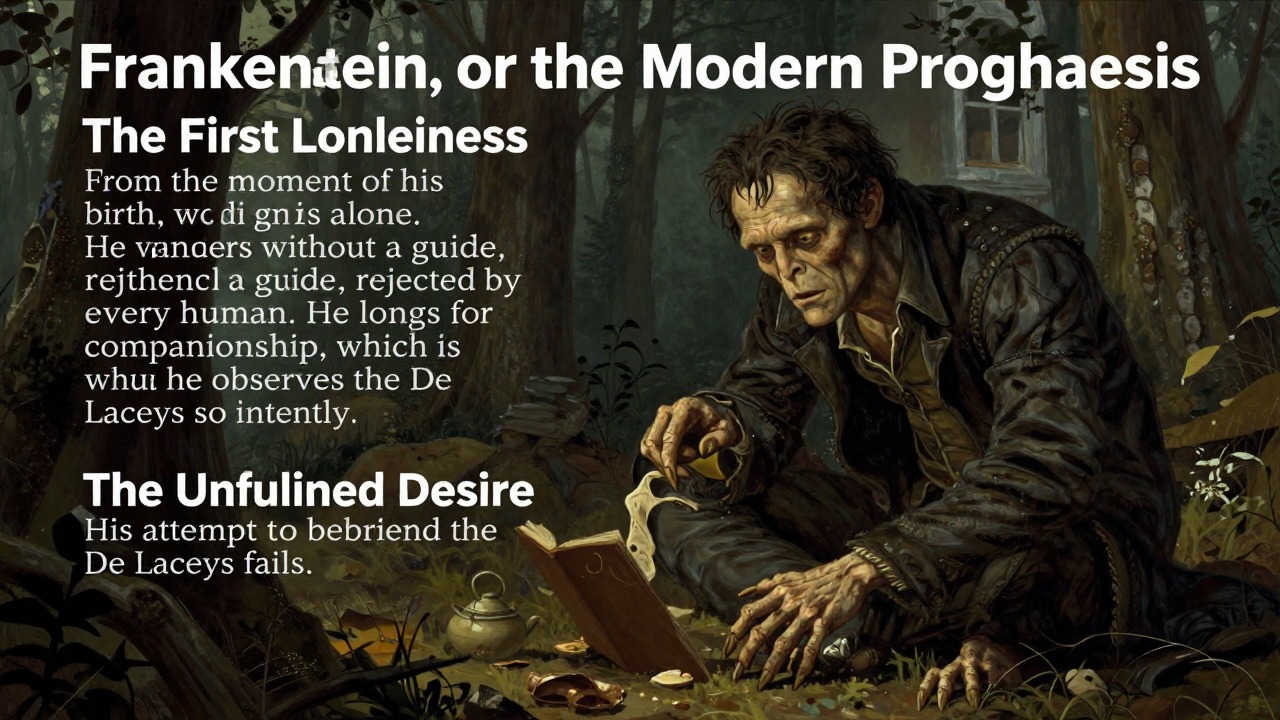
A Life Without Kinship
The First Loneliness
From the moment of his birth, the monster is alone. He wanders without a guide, rejected by every human. He longs for companionship, which is why he observes the De Laceys so intently.
The Unfulfilled Desire
His attempt to befriend the De Laceys fails. He asks Victor for a mate, but that is also denied. The monster's isolation is absolute: he is the only one of his kind, and no one will accept him.
The Consequences
Loneliness turns him to revenge. He says, "I am malicious because I am miserable." His isolation is the root of his evil. In the end, he chooses death, finding peace only in the thought of oblivion.
Victor's Self-Imposed Isolation
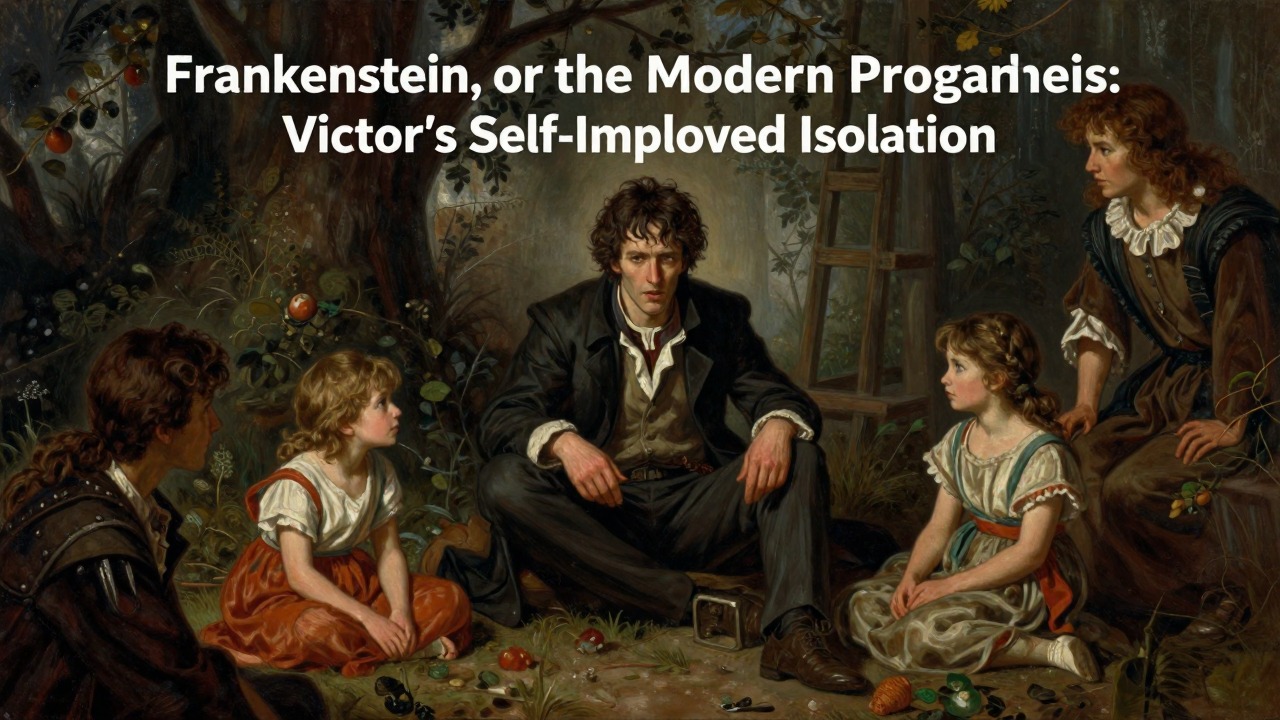
The Burden of Secrecy
The Separation from Family
Victor cannot share his secret with his family. He is isolated by his guilt and the horror of his actions. He retreats into solitude, unable to find comfort in their love.
The Alienation from Society
Victor's obsession makes him a stranger to human society. He abandons his studies, his friends, and his future. He feels that he is no longer fit for human company.
The Final Isolation
After the deaths of his loved ones, Victor is completely alone. His pursuit of the monster is a solitary journey. He dies without achieving his goal, isolated even in death. The novel shows that isolation, whether self-imposed or forced, leads to despair.
From his creation to his decision to die
After the creation, throughout the novel
